Office Clearance in Chessington
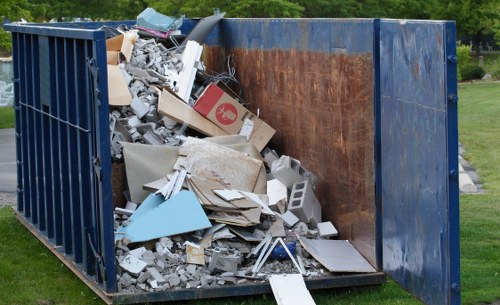
Office clearance in Chessington should be straightforward, orderly and suited to the way your workplace actually operates. We provide a practical clearance service for offices that need desks, chairs, filing, storage, IT items and general contents removed with as little disruption as possible. Whether you are reducing floor space, moving out, refreshing a workspace or dealing with surplus items after an internal change, the aim is to leave the premises clearer and easier to hand over.
Our work covers a wide range of office contents, from individual items that no longer fit the room layout to larger clearances where several areas need attention at once. We can separate reusable items from mixed waste, manage furniture removal carefully and work with the layout of the building so access stays sensible throughout the job. For broader details on our approach, see our office clearance service and the related business waste removal page for commercial waste handling.
If you are planning a clearance in Chessington, it helps to identify the main items first and think about any access limits, timing needs or items that must be kept aside. A short note about the type of office, floor level and volume of contents is usually enough to start the discussion. If you are ready to compare options, please ask for a quotation in plain text or use our contact page at the end of this page.
What we clear from offices

Office spaces often contain more than people expect. Alongside workstations and seating, there may be storage units, meeting tables, reception furniture, archive boxes, assorted office equipment and loose materials that have built up over time. A careful clearance service takes these different item types into account rather than treating everything as one pile. That means we can work methodically through the space, remove items that need to go and leave the remaining furniture or equipment in place.
We also understand that offices can change function part-way through a clearance. Some businesses need a full emptying of a suite, while others only need particular rooms, old furnishings or redundant stock removed. In either case, it is useful to separate the pieces that are to remain from those that are to be taken away. Flat clearance and home clearance are different services, but they show the same basic principle of sorting items cleanly and working through a property with care.
Common office items that may be included in a clearance are:
- desks, chairs and meeting tables
- filing cabinets, shelving and cupboards
- archive boxes, stationery and general office contents
- reception furniture and waiting-area items
- small office equipment and loose mixed items
Furniture, fittings and equipment
Most office clearances are driven by furniture rather than waste alone. Desks and storage units can be awkward to move if they have been arranged around partitions, cables or tight corridors, so the order of work matters. We can remove pieces that are no longer needed, while taking a sensible approach to the items that still have a use or need to be kept for a later stage. This keeps the process practical for landlords, tenants and managers alike.
Furniture-heavy clearances often benefit from a room-by-room plan. A reception area, a boardroom and a back-office store can all contain different types of item, and not every piece should be handled in the same way. We pay attention to the condition and arrangement of the contents so the clearance is not rushed. For additional options beyond offices, our furniture clearance and furniture disposal pages explain how we deal with furniture-led jobs.
Useful ways to prepare the space
Useful ways to prepare the space
A good clearance starts with a simple walk-through of what stays and what goes. Where possible, it is helpful to mark the items that should be left alone, especially when a room contains shared storage, personal equipment or documents that need to remain on site. If the office is still in use, it can also help to know which areas must stay accessible during the work so movement through the building remains clear.
One or two practical details can make planning easier. For example, it helps to know whether the job involves a single office, several rooms or an entire floor, and whether there are stairs, loading constraints or security steps to consider. If you are comparing service types, our loft clearance and garage clearance pages show how different spaces can require different handling, even when the goal is simply to remove unwanted contents.
Before asking for a quotation, consider sharing:
- a brief description of the office area
- the main types of furniture or items involved
- any access issues, lifts or stair use
- the date range you are working to
Pricing factors and quotation details
Clearance pricing is usually shaped by practical factors rather than a single simple measure. The amount of furniture, the time needed to remove it, the ease of access and the type of items involved can all influence the work. A small office with a few unwanted pieces is naturally different from a larger premises where several rooms need emptying. When you request a quotation, giving a clear outline of the job helps it reflect the real scope.
It can also be useful to mention whether the clearance is part of a changeover, an end-of-lease handover or a general office reorganisation. Those details help us understand whether the emphasis is on speed, careful sorting, partial clearance or a fuller emptying of the space. For commercial customers wanting to compare related services, the pricing and quotes page sets out the enquiry process, while business waste removal provides a wider view of commercial removal work.
There is no need to overcomplicate the enquiry. A short written description is often enough to begin, and we can then discuss the main parts of the clearance in a sensible order. If you are weighing up the next step, ask for a quotation and keep the details focused on the office area itself.
Recycling, reuse and disposal
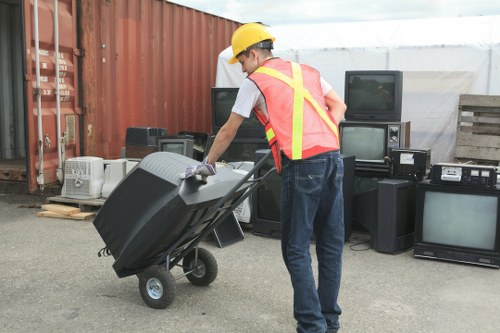
Not every office item is handled in the same way. Some contents may be suitable for reuse, while others need to be removed as mixed waste or broken down into separate material streams. A responsible clearance service looks at the items in front of it and keeps the process organised so anything that can be dealt with more appropriately is not simply treated as one general load. That approach supports a tidier clearance and a more considered outcome.
Where office furniture is still in reasonable condition, it may be useful to think about whether it should be reused, transferred elsewhere or removed alongside other items. Damaged or worn pieces, by contrast, may need different handling. Our recycling and sustainability page gives a wider view of how materials can be approached, and waste removal covers broader disposal work beyond office settings.
As a customer, you do not need to sort every item into a perfect order before the job begins. What helps most is a clear outline of what the office contains and whether there are any pieces that must stay. Clear instructions at the outset can make the clearance smoother, but the actual sorting and removal should still be handled in a practical, methodical way on site.
About Chessington
Chessington is an area in the Royal Borough of Kingston upon Thames, in southwest London, close to the boundary with Surrey. It is known for a mix of suburban streets, open land, local shopping parades and transport links that connect it with neighbouring parts of London and the county edge. The area sits near the River Mole corridor and the green landscape to the south and west, which gives it a more spacious feel than inner urban districts while still remaining firmly part of the capital’s suburban fabric. Its history reaches back much further than the present residential neighbourhoods, with the name appearing in records from the medieval period and later development shaped by rural estates, roads and the gradual spread of housing.
The area includes several notable landmarks and institutions, the best known being Chessington World of Adventures Resort, which has become one of the area’s most widely recognised visitor destinations. Beyond that, Chessington also has a patchwork of local parks, schools, sports facilities and residential roads that reflect its evolution through the twentieth century. The built environment varies from older village-centred remnants to later suburban developments, and the local street pattern still hints at the shift from a more rural settlement into a commuter district. Rail and road connections have long influenced the area’s character, helping link it with Kingston, Surbiton, Epsom and other nearby places.
Green space remains an important part of Chessington’s identity. The surrounding edges of the borough include farmland, woodland and the open spaces associated with the wider Surrey borderlands, while local parks and recreational ground give residents everyday access to outdoor areas. The district’s position on London’s fringe means it combines urban convenience with a less dense residential setting, and that combination is visible in the mix of housing, shops and open land. For anyone studying southwest London, Chessington offers a clear example of how a historic place name can persist while the built form around it changes over time.
Office clearance for changing workplaces
Workplaces evolve. Teams grow, departments contract and layouts shift, which means the contents of an office can change quickly as well. A sensible clearance service supports those changes by removing surplus items without turning the job into a disruptive event. That can include old desks after a reconfiguration, redundant storage after a move or obsolete furniture before a lease handover. The aim is always to keep the work orderly and manageable.
For some customers, the main concern is clearing one occupied area while the rest of the office remains active. For others, it is a more decisive change where several rooms need to be emptied in stages. In either case, a careful plan helps the work progress in a logical sequence. If you need a broader look at office-related removal work, our office clearance service and business waste removal pages are the most direct starting points for understanding what can be arranged.
Contact us to request a quotation for office clearance in Chessington, and keep your message brief with the main items, access details and preferred timing. If you are still deciding, a plain text enquiry is fine too.
End-of-lease and handover clearances
When an office lease ends, the clearance often has to be completed with a clear handover in mind. That usually means removing the contents that no longer belong in the space, checking that shared or retained items are not taken by mistake and leaving the area ready for the next stage of occupation. The service can be particularly useful where furniture, archive material and miscellaneous stock have accumulated in separate rooms over time.
We can work from a straightforward list or a room-by-room overview, depending on what makes most sense for the premises. A careful handover clearance may also involve a different level of attention to what stays, since some items may belong to a landlord, a managed building or another tenant. Where relevant, our about us page offers general company information, while office clearance remains the best page for the core service scope.
For busy workplaces, the most helpful approach is often to keep the request concise and practical: describe the office, note what must be removed and mention any constraints that may affect how the work is carried out. That gives enough information to discuss the clearance properly without adding unnecessary detail.
Further support for office and commercial removals
Some customers need more than one type of clearance over time, especially where a business premises contains furniture, archive material and other mixed contents. In those cases, it helps to keep the work segmented so the right items are handled in the right way. A commercial clearance is usually easier to manage when the job is described clearly from the outset and when the main priority is identified: furniture removal, general waste removal or a fuller emptying of the area.
Where office contents overlap with other premises types, similar principles still apply: assess the items, decide what remains, and arrange removal in an orderly way. You may also find the house clearance and builders waste clearance pages useful if your project includes domestic contents or post-refurbishment materials alongside the office work. The important point is to match the service to the contents, not to force everything into one category.
If you are ready to move ahead, ask for a quotation and provide the key details in one message. If you are comparing options, start with the main office area and the items that need to go, then decide whether any linked clearance pages are relevant to your wider project.